
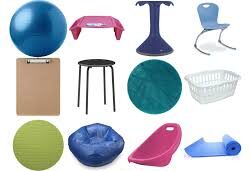
Flexible seating to support attention and focus for kids with ADHD or Autism.
Traditional seating arrangements aren’t always the best fit for kids with sensory needs, especially when learning, play, and regulation often happen in the same space. The ability to move, wiggle, fidget, or curl up can significantly impact their ability to focus, regulate emotions, and engage in daily tasks. That’s where flexible seating at home can make a real difference. By rethinking how and where your child sits for activities like homework, reading, or even mealtime, you can create an environment that supports their sensory needs and enhances attention and learning.
What is flexible seating?
Flexible seating simply means providing a variety of seating options that your child can choose from depending on how they’re feeling and what they’re doing. Instead of a single desk and chair setup for homework or screen time, imagine offering choices like a beanbag for reading, a wobble stool for writing, or a yoga ball for watching educational videos. For children with sensory modulation difficulties—which are common in both autism and ADHD—this flexibility can be therapeutic. Whether your child is under responsive or over responsive to different kinds of sensory input, sitting still in a rigid chair for extended periods can be a real challenge. Giving them options to move or recline helps meet their unique sensory needs in a non-disruptive way.
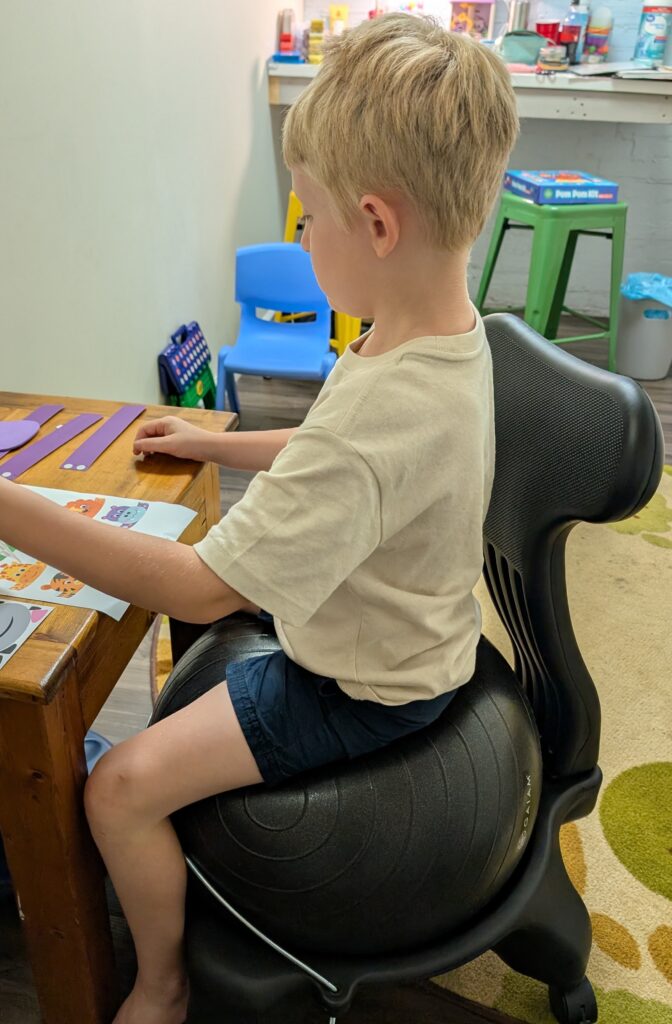
For example, the picture below features Clayden, a 6 year old boy with ADHD who has difficulty sitting in a standard chair or using a stationary stool during his sessions. He is able to use this ball chair to move his body through gentle rocking and bouncing while still maintaining his focus on the craft he is working on. He is also better able to maintain a safe and functional position to engage in the task. Other options that provide similar opportunities may be a wobble stool or a wiggle cushion. These seating options allow for gentle movement, which can improve focus by giving the body the sensory input it craves without the child having to leave the task. On the other hand, a child with autism who becomes overstimulated by their environment may feel calmer and more grounded working in a cozy corner with floor cushions, a weighted blanket, or even a small pop-up tent. Having a choice in where and how to sit can give them a sense of control, reduce anxiety, and help with emotional regulation.
What makes flexible seating especially powerful in a home setting?
What makes flexible seating especially powerful in a home setting is the ability to customize the environment to fit your child’s individual needs. You might find that your child focuses best on homework while standing at the kitchen counter or prefers lying on their belly on a rug with a lap desk. Others might do better with a rocking chair or ball chair that provides calming vestibular input. These small changes can help reduce meltdowns, improve engagement with tasks, and promote independence.
Setting up flexible seating at home doesn’t require a major renovation or expensive equipment.
Start by observing where and how your child naturally gravitates during play, meals, or quiet time. If your child is always sliding off their chair or lying on the floor, that’s a signal they may need something different. You probably already have a few options you could try without even realizing it. Something as simple as a pile of pillows on the floor or kneeling on a pillow at a low coffee table are great examples of flexible seating options. Offer choices during structured times—such as “Would you like to do your reading in the beanbag or on the yoga ball today?”—and help your child learn how to match their energy level with the right seat. Over time, many kids become more aware of their own needs and can start choosing seating that helps them stay regulated and focused.
It’s also important to build some gentle structure into your flexible seating routine. Too much freedom can be overwhelming for some children. Instead of making every seat available at once, consider limiting choices to two or three options at a time and using visual supports, like a photo chart, to help your child pick. Having a consistent “home base” seat—such as a particular cushion or desk—can also provide predictability while still offering the option to switch when needed. Consult your OT for which styles of seating may be the best option for your child based on their specific and unique sensory needs.
What does flexible seating at home look like?
Beyond supporting academic tasks, flexible seating at home can also help during play, meals, and quiet time. A child who has trouble sitting through dinner might benefit from a wobble stool or a foot fidget under the table. A reading nook with soft textures and calming lighting can help a sensory-seeking child slow down before bedtime. Swing chairs, crash pads, or peanut balls can add opportunities for movement and deep pressure throughout the day, which often leads to better focus later. The key is recognizing that for many kids with autism or ADHD, movement and comfort are not distractions—they are tools for self-regulation and success.
In many ways, flexible seating at home is about respecting your child’s need for autonomy while creating an environment that supports their nervous system. When children feel physically supported and emotionally safe, they are more available for connection, learning, and growth. Rather than expecting a child to conform to one way of sitting, flexible seating meets them where they are—whether they need to bounce, rock, curl up, or stretch out.
Self-awareness, independence, and power struggles.
Ultimately, flexible seating at home can become an empowering part of your child’s daily routine. It fosters self-awareness, promotes independence, and reduces power struggles. Most importantly, it helps your child focus and thrive in a way that respects their sensory needs and unique learning style. Flexible seating offers a simple yet powerful way to support attention and regulation! Our OTs here at Communication Station GA would be happy to help you navigate what types of flexible seating options might work best for your child and your home.
Kristen Whaley- OT