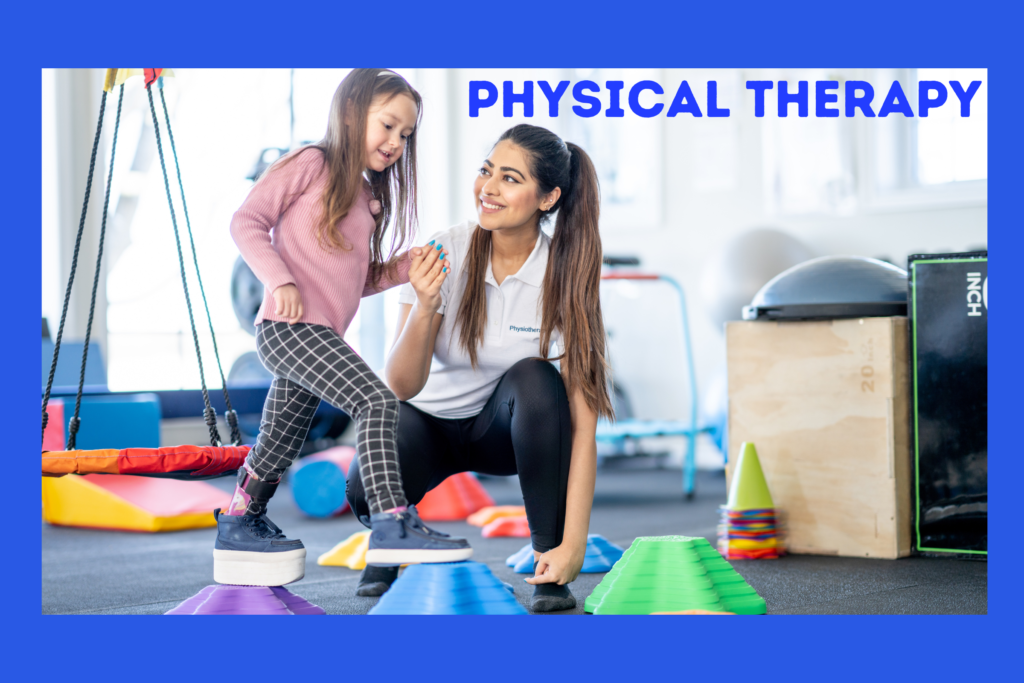
When a child is displaying a delay or asymmetries in his or her gross motor skills, a physical therapist can help.  Physical therapists focus on improving strength, balance, coordination, and range of motion.  They also assist with helping children improve their mobility when impaired due to surgery or a medical condition.  If indicated, physical therapists can assess a child and recommend adaptive medical equipment that is appropriate to help the child meet his or her needs.

 🧒💪 Helpful Tips for Pediatric Physical Therapy

Support Your Child’s Progress with These Simple Strategies


🎮 1. Make It Fun
Turn exercises into games or playful activities.
➡️ Example: Dance, animal walks, or obstacle courses.

📅 2. Stick to a Routine
Same time, same place = success!
➡️ Tip: Build therapy into daily habits, like after snack time.

🎉 3. Celebrate Small Wins
Every step counts.
➡️ Try this: Use a sticker chart or give high-fives for effort!

🏠 4. Practice at Home
A little practice each day makes a big difference.
➡️ Tip: Ask the therapist for easy home exercises.

👀 5. Be Involved
Watch sessions, ask questions, and join in.
➡️ Why? You’re your child’s biggest coach and cheerleader!

🧩 6. Use Everyday Moments
Therapy doesn’t only happen in the clinic.
➡️ Try this: Have your child reach, bend, or balance while playing or helping at home.

💬 7. Stay in Touch
Keep open communication with your therapist.
➡️ Share: What’s working? What’s challenging?

❤️ 8. Be Patient & Positive
Progress takes time. Stay kind, calm, and consistent.
➡️ Remember: Encouragement goes a long way!

Helpful Websites